A shared belief
A 150-strong group of Yale alumni volunteers travelled to Yamoransa, a village on Ghana’s Cape Coast, with a shared commitment to supporting the community. Rather than deciding what was needed, they asked local residents, who identified an ICT centre as their priority. Working alongside the community on land donated by the Catholic Church, the volunteers began construction during an intensive ten-day visit. Over the next three years, that initial effort grew into a completed two-storey centre housing computers, and a community gathering space—laying the foundation for a much bigger idea.
Proving the model
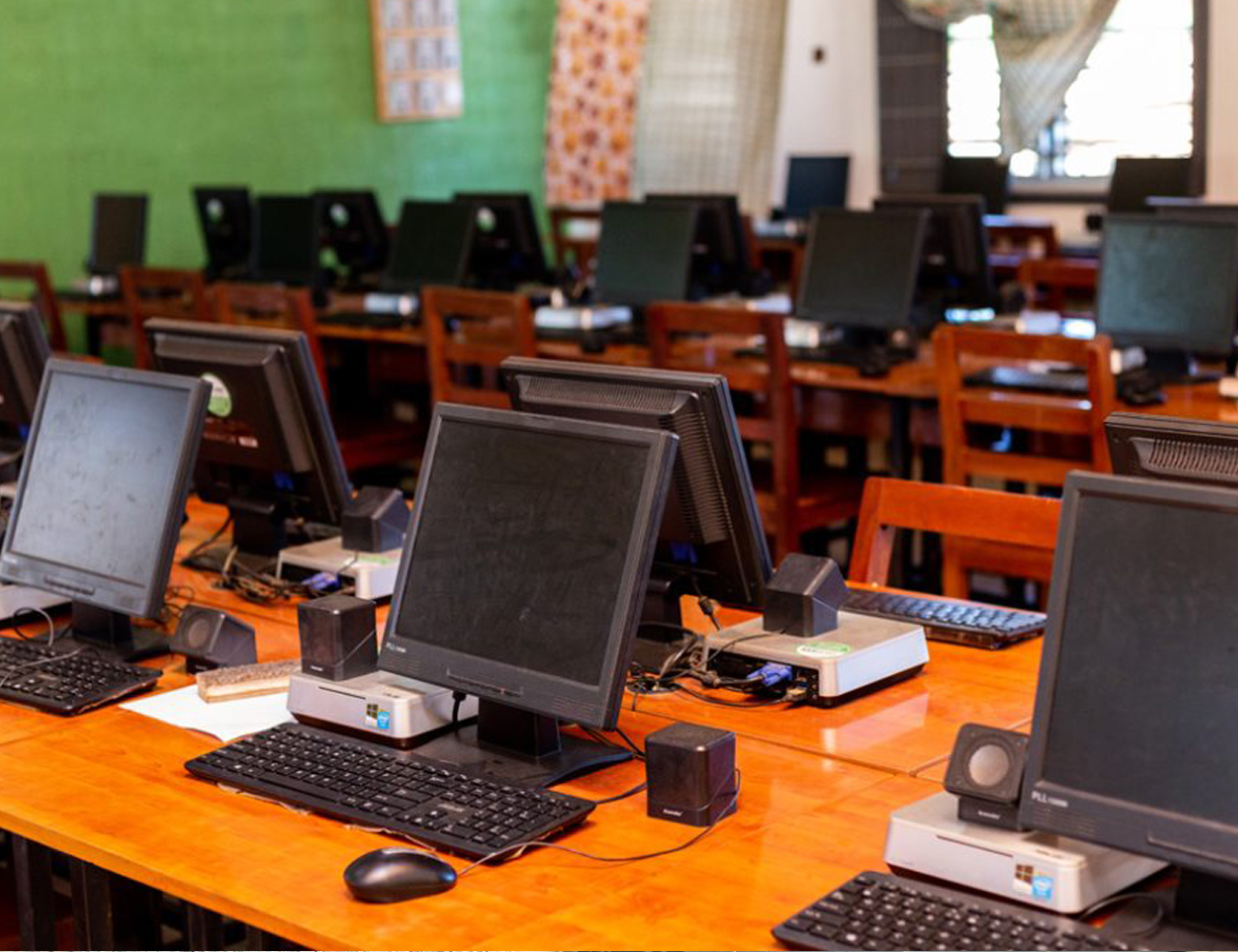
With support from the Helping Africa Foundation, led by Dr Deborah Rose, our first lab opened in Yamoransa in 2016 and was formally dedicated at a ceremony attended by the US Ambassador to Ghana. The following year, a second lab opened at L&A Memorial Academy in Accra, a school founded by HAF Executive Director Japhet Aryiku.
A turning point
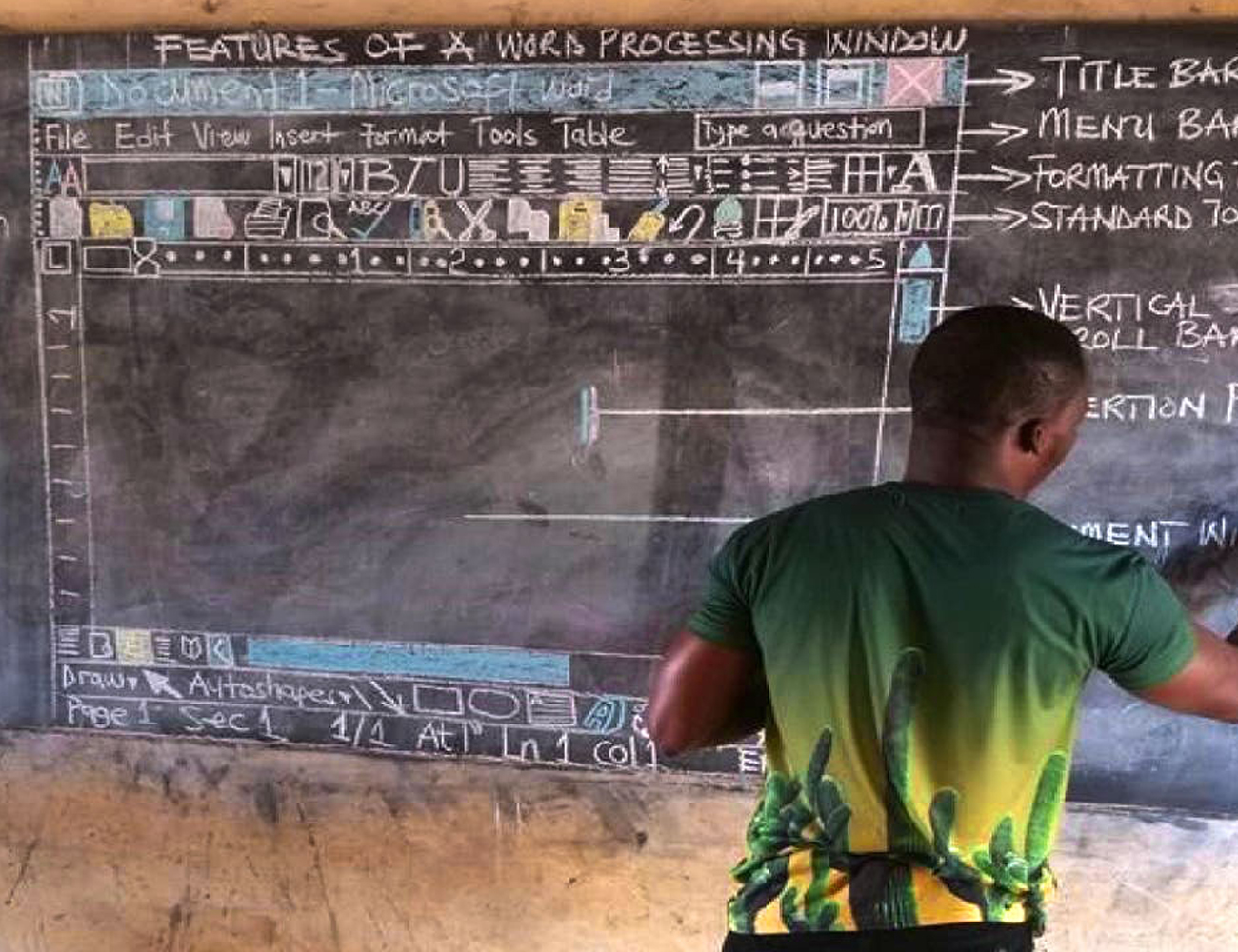
The turning point came when a video went viral: a Ghanaian teacher, working without computers, had painstakingly recreated Microsoft Word’s menus on a blackboard so his students could learn. The image revealed both the scale of the digital divide and the ingenuity already at work in the classroom. It inspired the creation of Lab 3 at Betenase Junior High School—and gave our approach its name: the Yamoransa Model.
Scaling across Ghana
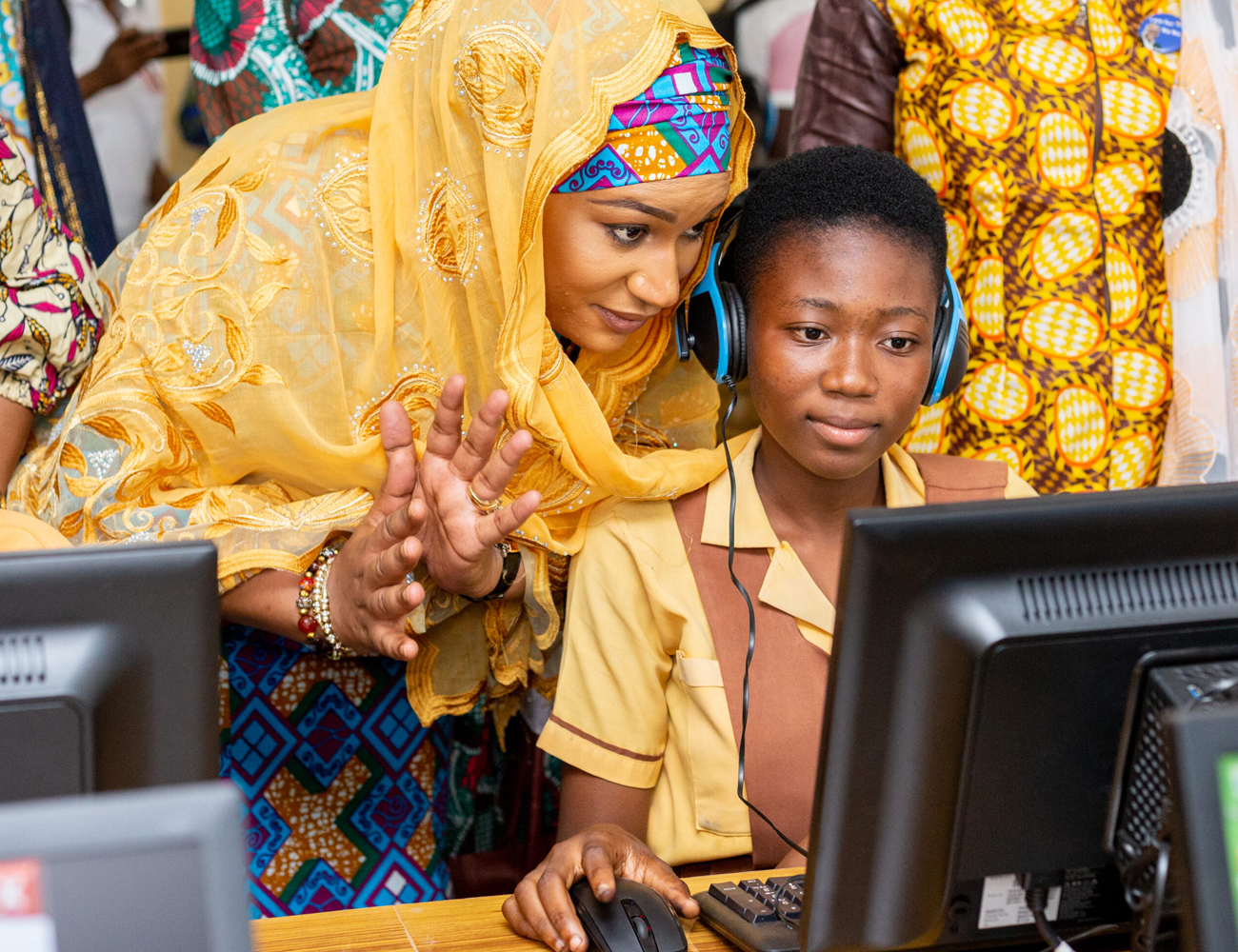
With a five-year national plan to build an ICT centre in each of the regions in Ghana and support growing at the highest levels, the Model scaled rapidly across Ghana. Second Lady Samira Bawumia championed a lab in Choggu and urged that solar power become a standard feature, while President Akufo-Addo supported a lab in his hometown of Kyebi. By the end of 2020, eight ICT and robotics labs were operating nationwide—including three inaugurated in November alone.
Beyond Ghana
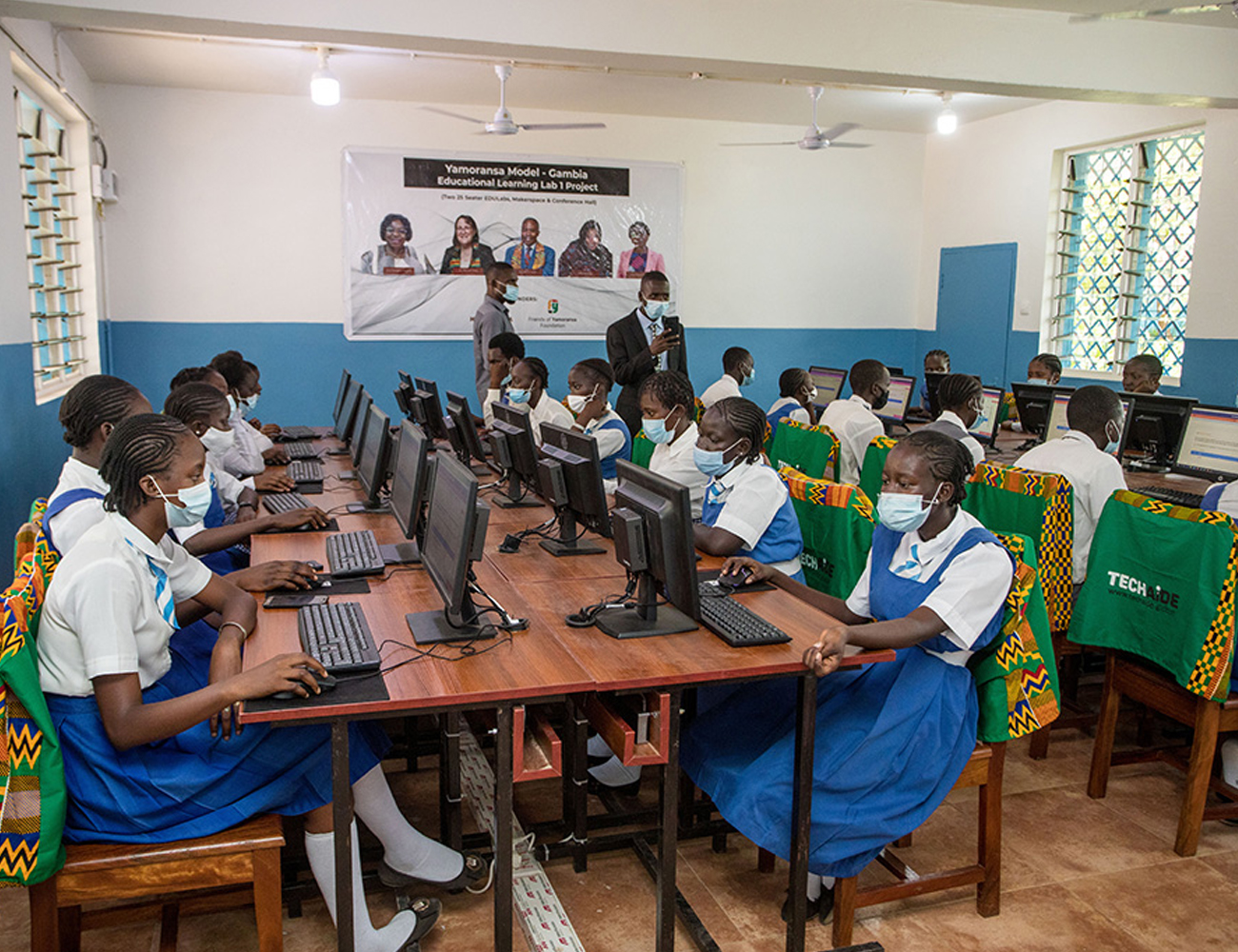
In July 2021, the Yamoransa Model crossed its first national border, establishing a lab in The Gambia and demonstrating that its community-led approach could flourish wherever people were ready to build. Before the year was out, three more labs had opened in Ghana’s Ashanti, Ahafo and Bono East regions. What had begun as one bold idea in a single village was rapidly growing into a movement that reached beyond borders.
A third country
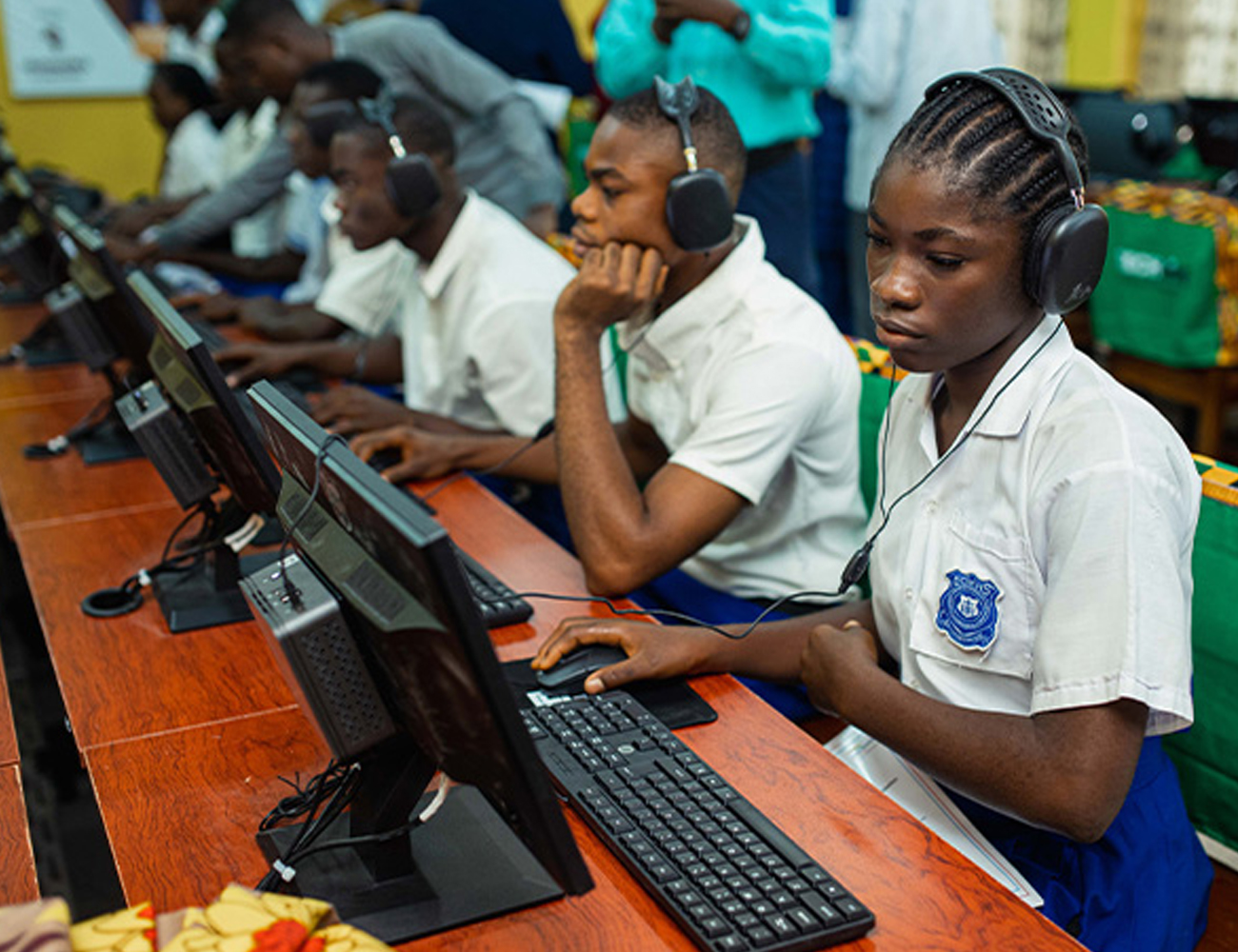
The initiative sustained its momentum in 2022, opening additional labs in Ghana’s Western North and Bono regions before expanding once more beyond the country’s borders. Liberia became the Model’s third country after engagement with government leaders, including former President Ellen Johnson Sirleaf. In July 2024, Liberia’s Minister of Education participated in the dedication of the new lab—an important milestone shaped by the principle that has guided every expansion: lasting progress begins with strong local partnerships.
Building for the future
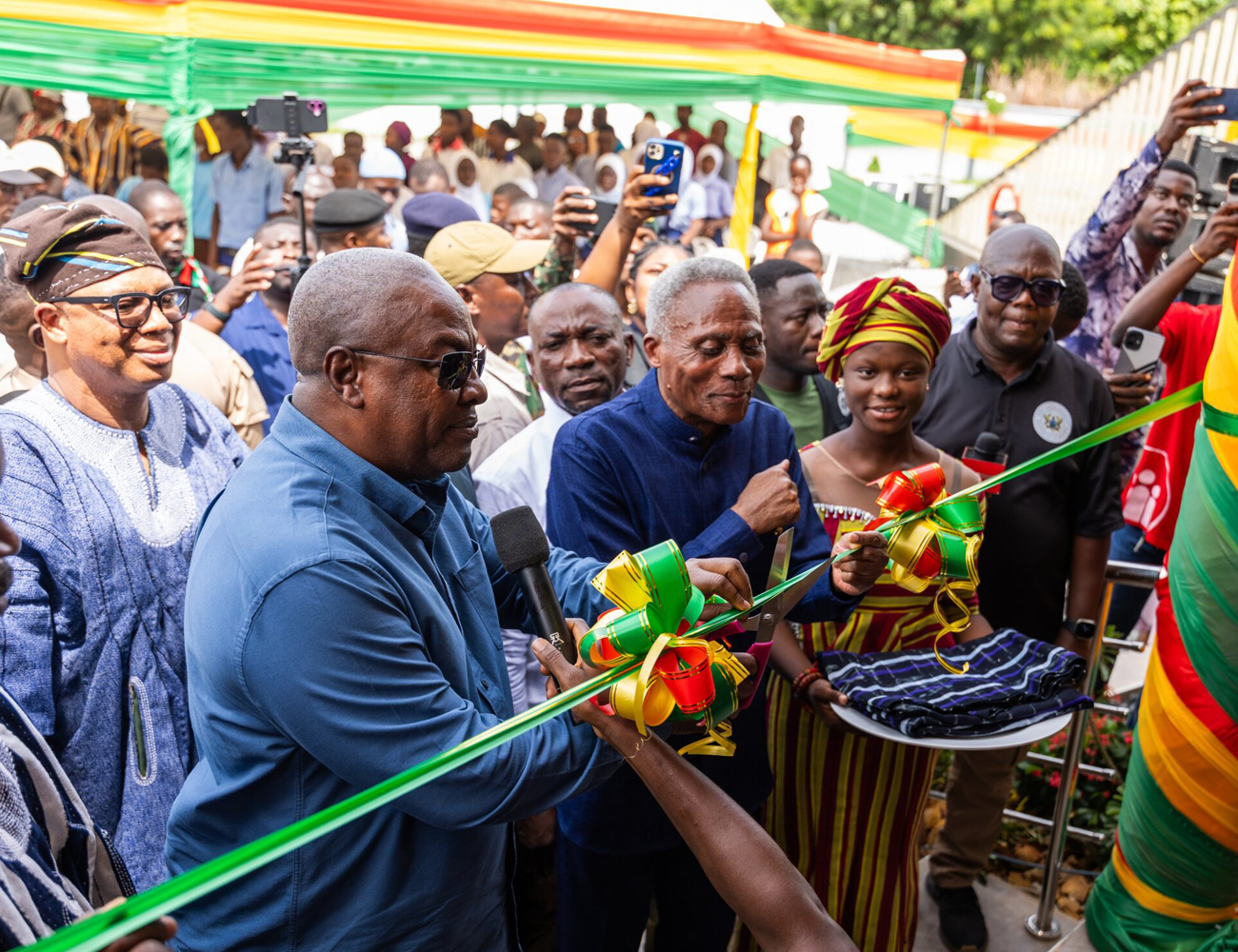
Our journey continues with the opening of an ultra-modern, solar-powered ICT and Robotics facility in Damongo, commissioned by Ghana’s President John Dramani Mahama. Designed to serve more than 4,000 students across ten schools, the new centre builds on the momentum of an earlier lab in Nadowli Kaleo, personally funded by the Speaker of Ghana’s Parliament. What began as a single ICT centre in 2012 has grown into an expanding network spanning Ghana, The Gambia, and Liberia—and the next chapter is already taking shape.