Community led, built together

The philosophy of the Yamoransa Model is based on the belief that genuine sustainable development cannot be imposed from the outside. It must be requested, designed, and embraced by the community itself. Rather than relying on the conventional, top-down charity where organisations deliver technology and walk away, the model follows a structured, five-stage, community-led philosophy known as the Need, Design, Install, Learn and Sustain (NDILS) Framework, outlined below.
No Title
No Title
No Title
No Title
No Title

Need initiated by
the community

No lab is built until a community asks for one. Every project begins the same way - not with an organisation deciding what a place needs, but with local leaders and residents recognising a gap and requesting help to close it. By collaborating with stakeholders, we create an accurate, community-verified picture of the educational gap we need to address, rather than relying on assumptions.

Design shaped by
local context

No lab is built from a single, ready-made template. Every design is shaped by programs, software, and physical components that are custom-designed and entirely informed by that community's own context and needs. By refining the design with local leaders, we ensure every lab is validated and approved by the community it's built for, not simply installed.

Install aligned to
global standards

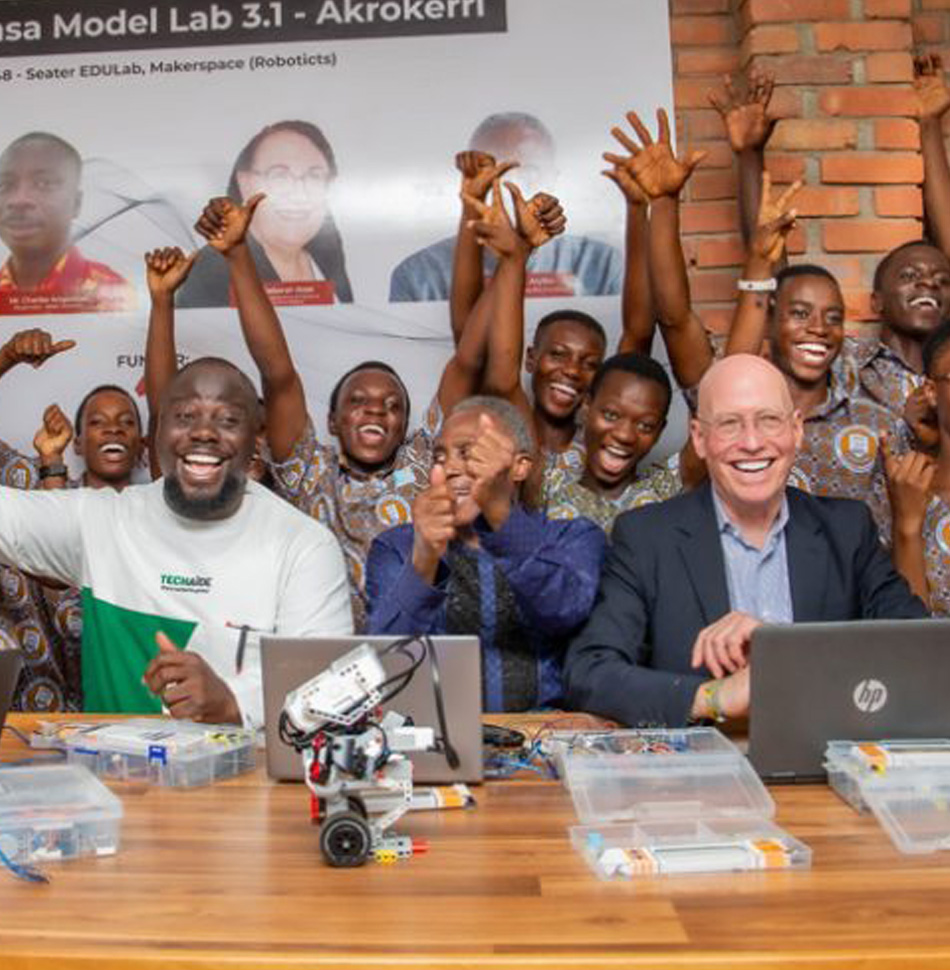
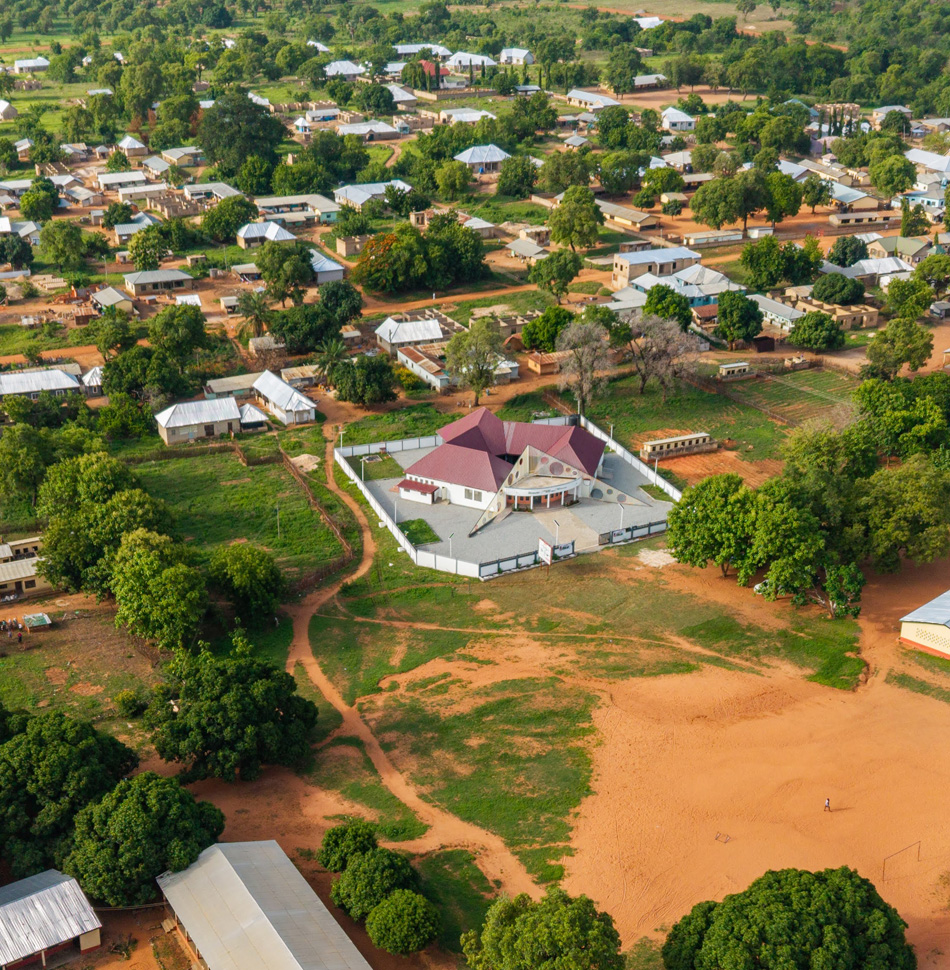
No lab is built to a lesser standard. Every lab is equipped the same way - solar-powered ICT hubs, robotics labs, 3D printers and Maker Spaces, built to the same specification found in the world's leading tech hubs. It's a deliberate choice: rural, underserved students deserve the exact same calibre of tools as their peers in the world's biggest tech hubs, not a scaled-back version built just for them.

Learn through doing
not memorising

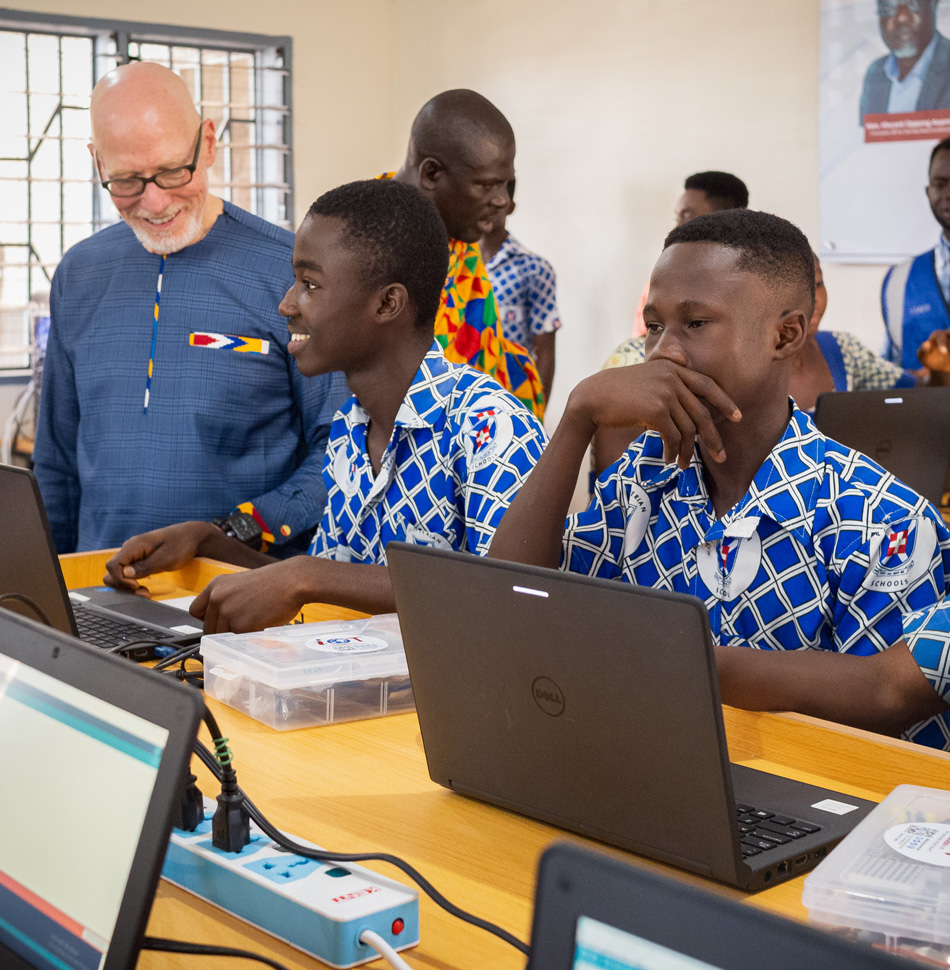
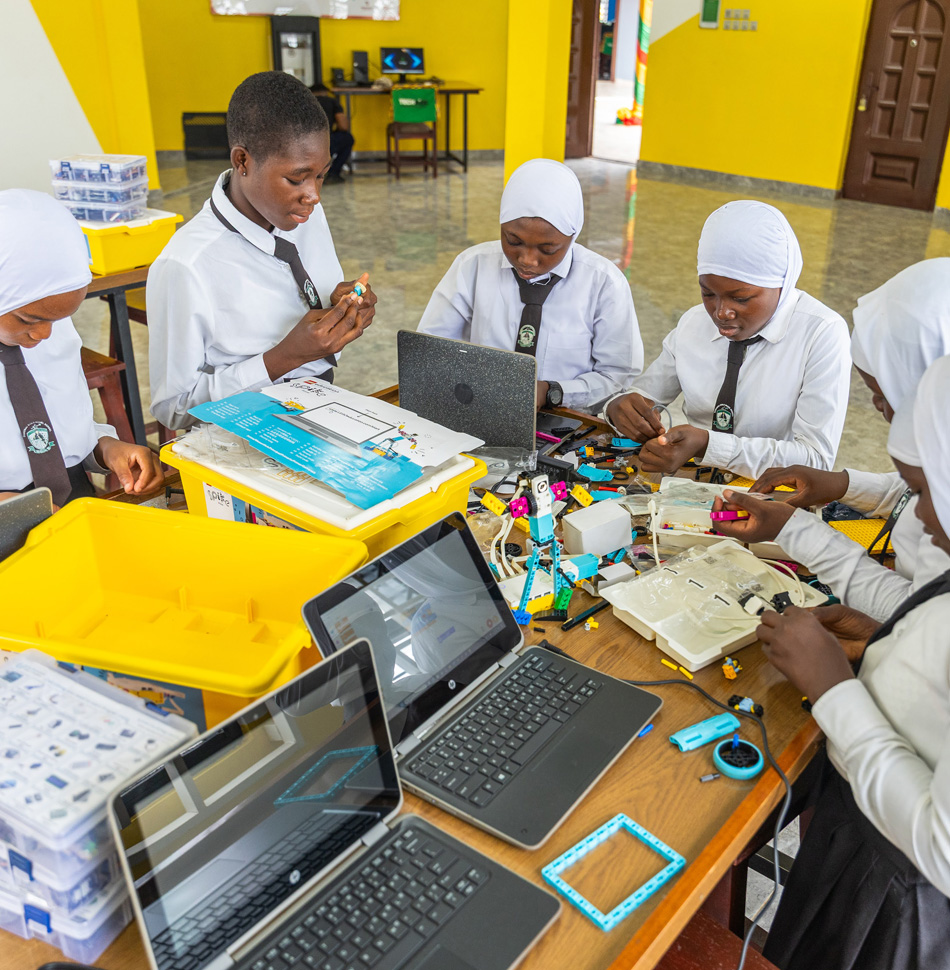
Real learning isn't memorised. It is discovered. Students code, build and solve real problems from their own community, instead of memorising from textbooks. This is intentional. A student who builds their own solution to a local problem doesn't just learn a skill. They learn to solve problems no textbook can teach them.

Sustain to impact
many generations

This is the heart of the philosophy. Before a single lab opens, we hold up to five meetings with local Education Directorates and Municipal Assemblies, and form a Management Committee drawn from the community itself. That committee runs, protects and maintains the lab, because a lab that belongs to its community is one whose impact lasts for generations.

Bridging the gap

Watch how our STEAM labs turn access into opportunity.